正在学习
9.12 Asynchronous Motor Operating Zones
9.12 Asynchronous Motor Operating Zones
Question: To reach the operating speed, what had to happen? In order to achieve the operating speed, the motor torque must be similar to the resisting torque. We plot the operating zones of the asynchronous motor (Fig. 9.36).
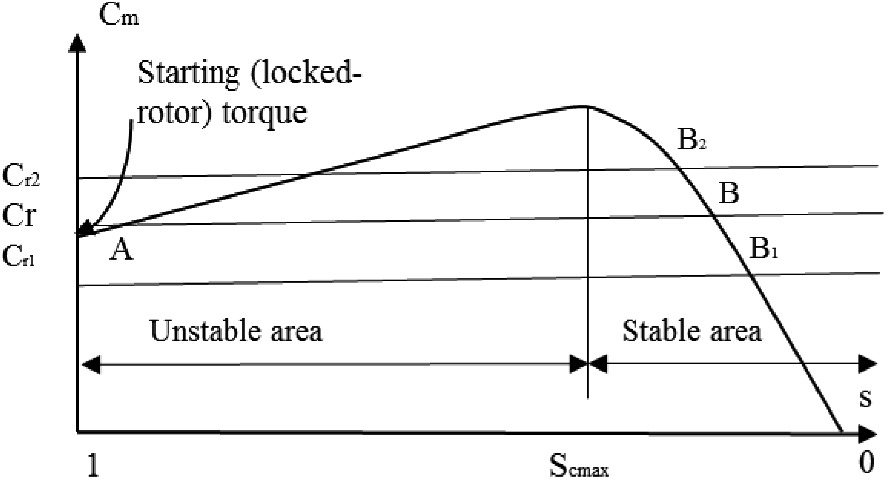
Fig. 9.36 Operating zones in the asynchronous machine.
The motor has a stable operational region wherein the motor exhibits angular acceleration in response to a load change. The system enters a new state of constant speed as a result of this acceleration. This section looks into how the motor continue running steadily at operating points that correspond to slip values that are less than the maximum slip of torque.
Now, let's assume the resistant torque (Cᵣ) that we see (Fig. 9.36). At points A (s > s_Cmax) and B (s < s_Cmax), the motor torque equals the resistant torque. Let's also assume that the motor starts at point B. The motor torque would exceed the resistant torque if the resistant torque decreases to Cᵣ₁ (as the motor maintains the speed from inertia), resulting in positive acceleration.
The rotor speed would increase (because of less slip), provoking a decrease in the motor torque. The motor would reach a new operating point at B₁, where its torque would match the new resistance torque. If the resistant torque were to increase to Cᵣ₂, the acceleration would become negative, resulting in a decrease in rotor speed (increased slip), which would lead to a rise in the motor torque. Under these circumstances, B₂ would be the new operating point. We can identify the most important points in the speed-torque curve (Fig. 9.37). Maximum torque point is at rated speed.
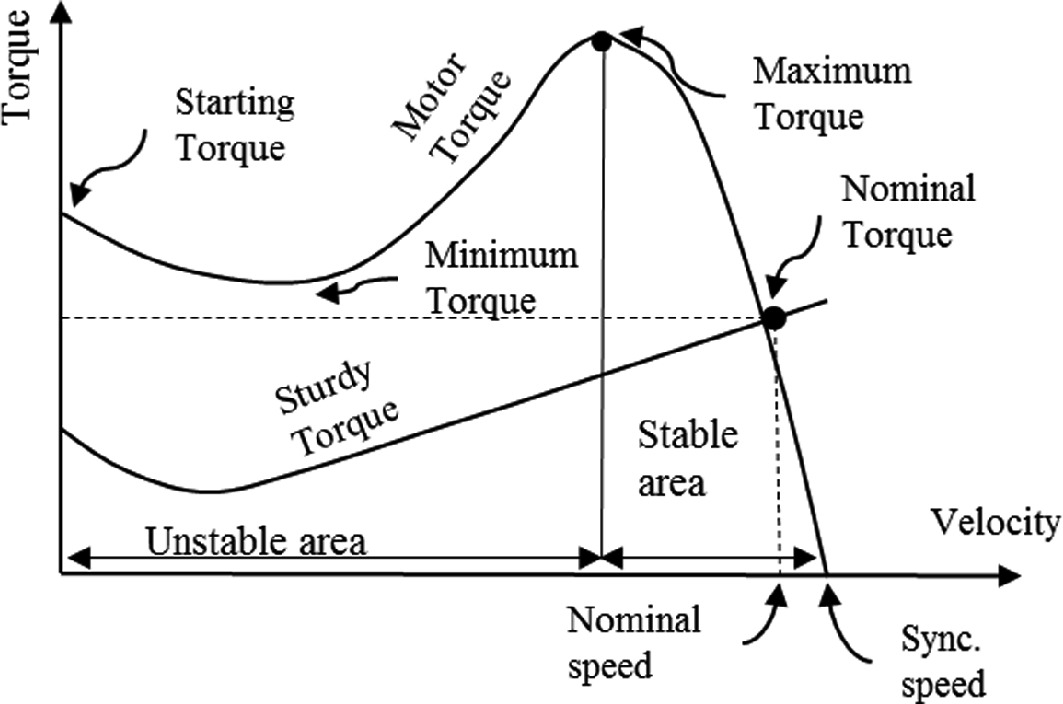
Fig. 9.37 Torque-speed curve.
We see how the current that the asynchronous machine absorbs affects the operating torque-speed curve (Fig. 9.38).
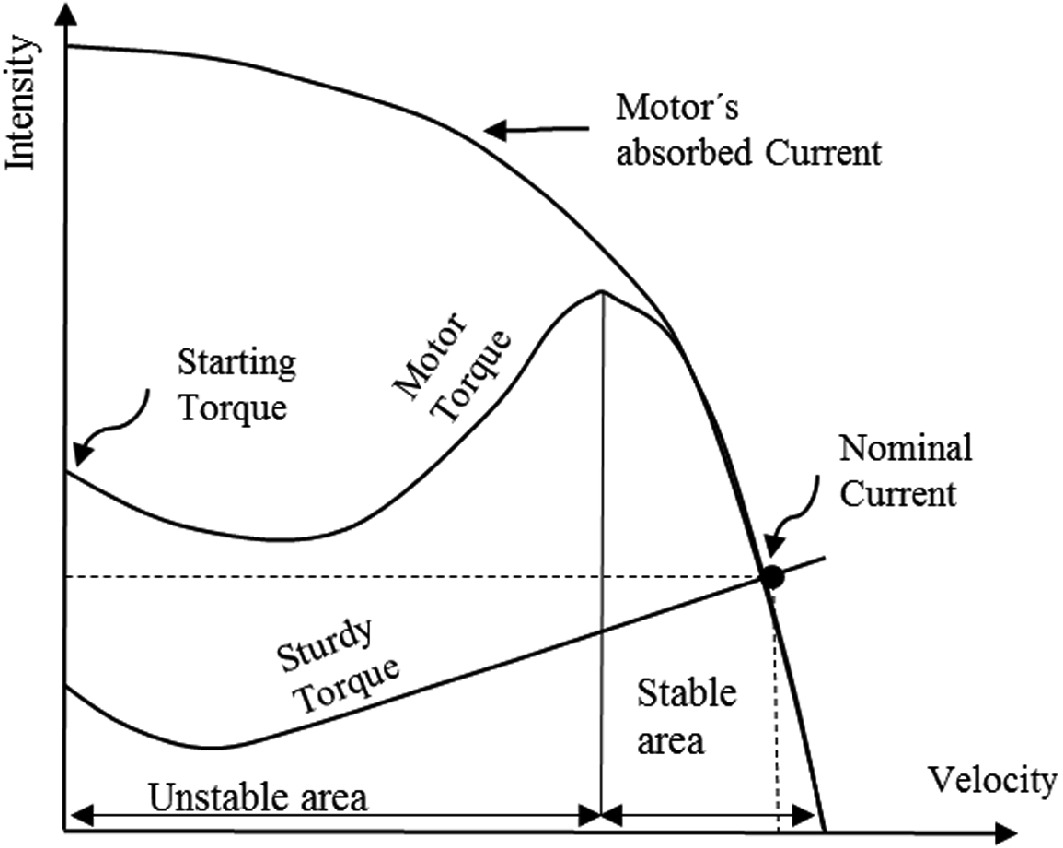
Fig. 9.38 Current-curve over the operating torque-speed curve. Source own elaboration
The figures clearly show that the engine torque passes through a range of values in an uncertain area. Here, if the resistant torque is excessively high and exceeds the torque curve, the machine might have trouble starting or might not start at all. After this unstable area is overcome, the engine reaches its designated speed and operates normally.
With a motor, there is an unstable zone where the machine may find problems for starting up, or might be able to start, if the resistant torque exceeds the torque curve. Then, we illustrate the operating areas of an asynchronous machine (Fig. 9.39).
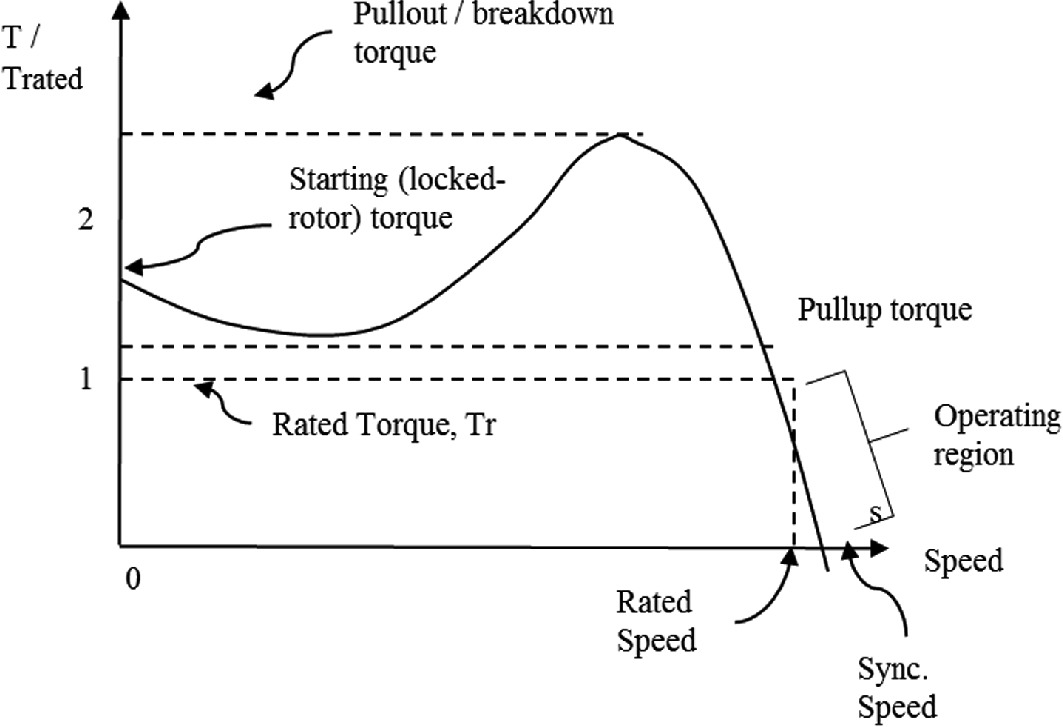
Fig. 9.39 Key points of the torque-speed in an asynchronous machine. Source own elaboration
Finally, we define the overload capacity of the asynchronous motor as the ratio of the maximum torque to the rated torque. This value typically ranges between 1.6 and 3. Thus far, we evaluated the asynchronous machine acting as a motor. Examining the range of possible operating conditions for this kind of device is a new addition to the study. Thus, the study incorporates the analysis of mechanical power, transmission of stator-to-rotor power, and the motor's torque as a function of slip's variation. Plotting the torque-slip graph for each slip value produces a graph similar to the one shown (Fig. 9.31). It is interesting to plot the areas where the induction machine operates, including the brake, motor, and generator areas (Fig. 9.40).
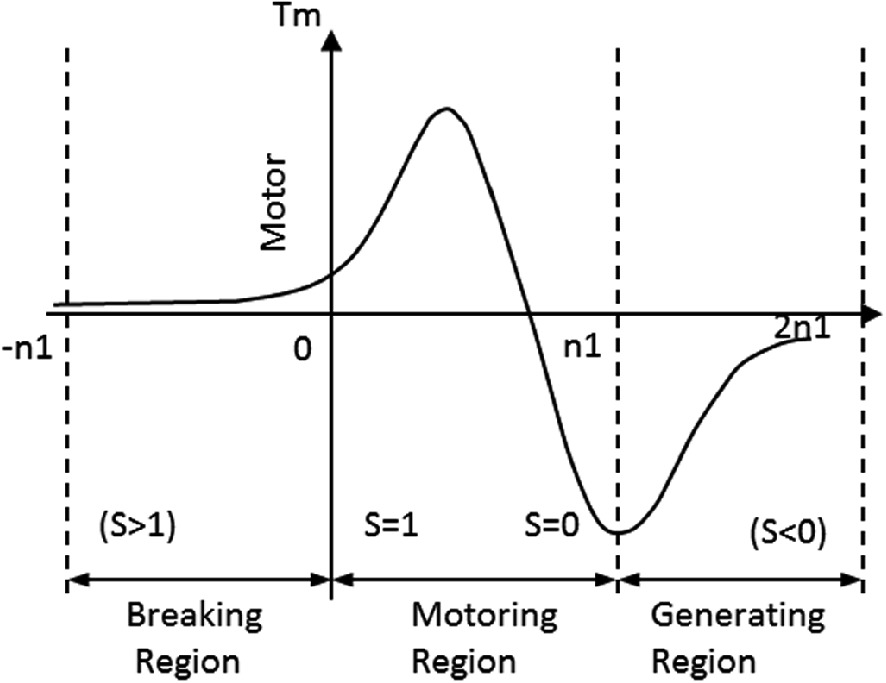
Fig. 9.40 Areas of operation in the torque-speed curve. Source own elaboration
It demonstrates the different modes of operation the induction machine: motor, brake and generator. We study five different operational scenarios to understand these modes.
At the outset, it is true that: n2 = 0 (s = 1), Pmi = 0; P12 > 0; Cm > 0.
Question What is the value of mechanical power during start-up? The machine does not supply any mechanical power during this phase since its shaft remains stationary, and the rotor only dissipates power as losses.
The following holds true at the no-load point n2 ≈ n1 (s ≈ 0), with what: Pmi ≈ 0; P12 ≈ 0; Cm ≈ 0;
If the slip remains between 0 < s < 1, the rotor speed varies between zero and the synchronous speed, satisfying: Pmi > 0; P12 > 0; Cm > 0.
This means that the rotor receives power P12 from the stator and delivers another power, Pmi, to the shaft. Under these conditions, the machine operates as an asynchronous motor. In the negative slip zone, the rotor speed exceeds the synchronous speed and both move in the same direction. Note that the rotor speed is higher than the field speed in the air gap.
s = (n1 - n2) / n1 → n2 / n1
Consequently, it follows that: Pmi < 0; P12 < 0; Cm < 0
This means that the rotor delivers power to the stator (P12) while receives power Pmi from the shaft. The machine, therefore, operates as an asynchronous generator. If the slip is greater than one, the rotor speed n2 is in the opposite direction to n1.
As a consequence: Pmi < 0; P12 > 0; Cm > 0.
This means that the rotor receives power P12 from the stator, as well as a certain power, Pmi, from the shaft.
Question When the rotor receives power, what would happen? In this case, the machine operates as a brake, and dissipates all the power that the rotor receives due to Joule losses in its windings.
练习题
In an asynchronous motor, where does the stable operating region exist on the torque-slip curve?
When the resisting torque on an asynchronous motor decreases while operating in the stable region, what is the immediate effect on the motor's acceleration?
The overload capacity of an asynchronous motor is defined as the ratio of maximum torque to rated torque. What is the typical range of this value?
Which of the following conditions must be satisfied for an asynchronous motor to operate at a stable operating point?
During the startup phase of an asynchronous motor (at ), which of the following conditions are true?
In an asynchronous motor, if the resisting torque increases while operating in the stable region, the acceleration becomes negative, causing the rotor speed to decrease and the slip to increase.
If the resisting torque exceeds the motor's torque curve in the unstable zone, the machine will always be able to start but will run at reduced speed.
At the no-load operating point of an asynchronous motor, the slip is approximately zero (), and both the mechanical power and motor torque are approximately zero.
In order to achieve the operating speed, the motor torque must be ___ to the resisting torque.
The overload capacity of an asynchronous motor is defined as the ratio of the ___ torque to the rated torque.
Explain what happens to an asynchronous motor's operating point when the resisting torque decreases while the motor is operating in the stable region.
Name the three operating modes of an induction machine and briefly describe the slip condition for each mode.
登录后解锁笔记、知识点解析、AI 问答
立即登录