正在学习
9.4 Constituent Parts and Their Function
9.4 Constituent Parts and Their Function
Question What are the basic constituents of an asynchronous machine? Like all rotating machine, asynchronous machines include stator, rotor and air gap. The stator winding acts as the inductor and comprises a bundle of magnetic plates with slots on its inner cylindrical contour (the closest to the rotor), regardless of the type of rotor it contains.
As was previously mentioned, the coils that comprise the stator winding are dispersed throughout the slots, for example in a three-phase stator machine (Fig. 9.8).
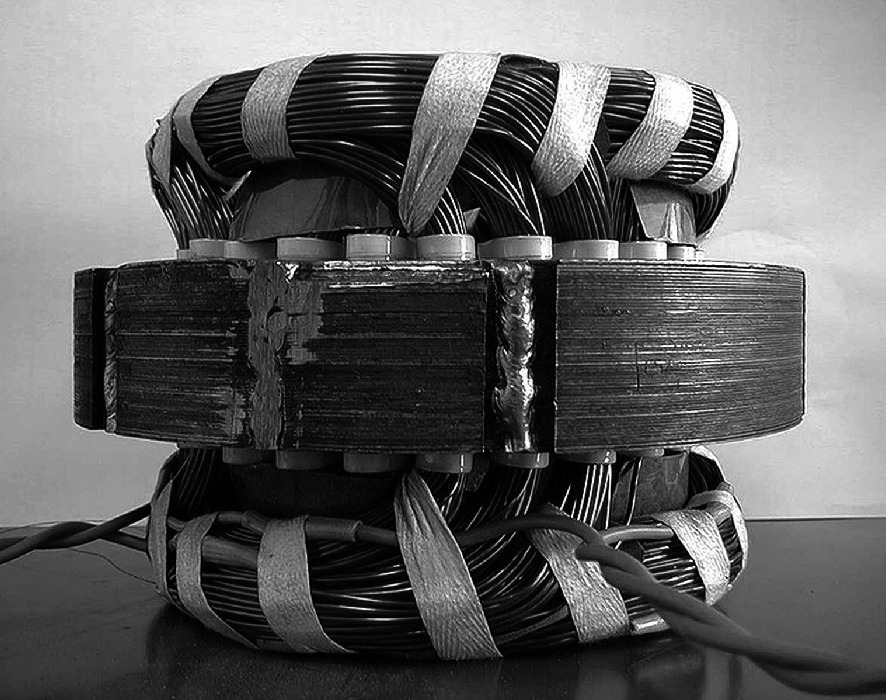
Fig. 9.8 Stator of an electric machine with windings.
The armature comprises the rotor winding, which can be a wound rotor or a squirrel cage type, as showed in the previous section. The wound rotor must have the same number of poles as the stator. For a squirrel cage rotor, the stator's field creates an equal number of poles in both the rotor and stator. The air gap is the distance between the two and, along with the stator and rotor magnetic packages, completes the machine's magnetic circuit.
The cooling system and the housing are essential auxiliary components. To dissipate the heat that the machine generates during its operation, the cooling system employs the rotation of the shaft to facilitate air circulation through embedded fans. The cooling system uses the shaft's rotation to promote airflow through fans embedded in order to dissipate the heat produced by the apparatus's losses, lowering the efficiency of the machine (Fig. 9.9).
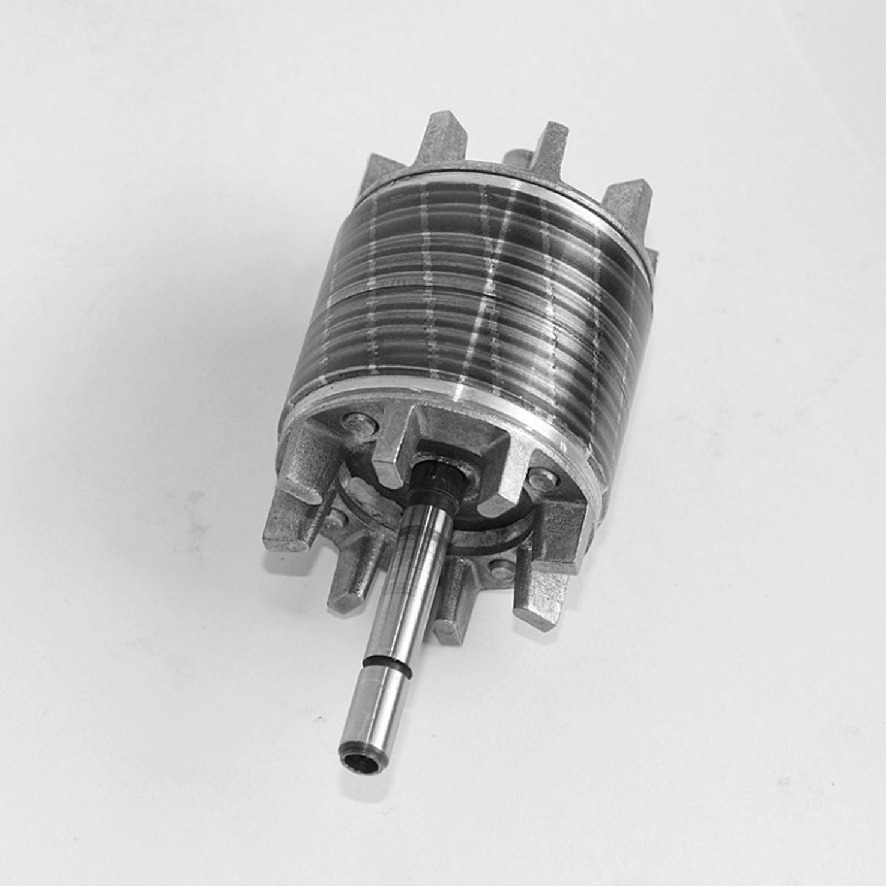
Fig. 9.9 Squirrel cage rotor with fans.
Question How can we improve heat dissipation? Axial and radial ventilation channels in the stator and rotor help dissipate heat. It also provides a way to install both passive and active cooling systems. An induction machine's housing serves two main purposes. First of all, it provides mechanical protection against external threats. The case protects, and holds some of the electric components that comprise the system (Fig. 9.10). It includes the stator, rotor, cover and two sets of bearings with their grease seals.
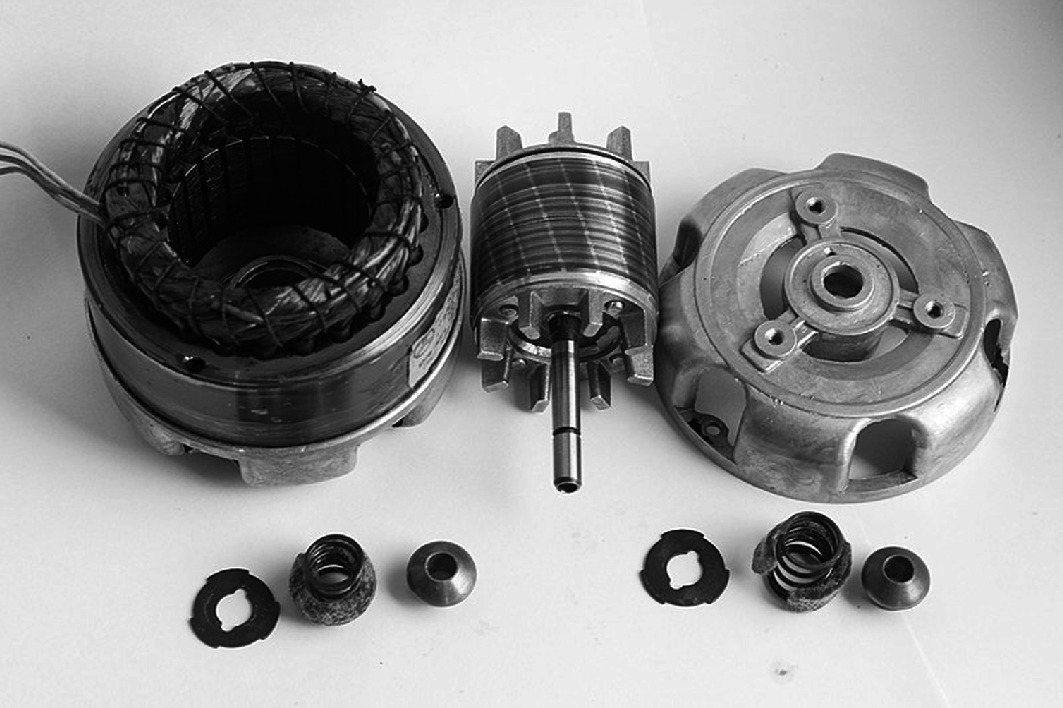
Fig. 9.10 Servicing the AD5 asynchronous motor of the Yauza-209–1 tape recorder.
Second, it is a safety feature for people.
It prevents them from coming into contact with potentially hazardous components (because they are live or rotate at high speed).
练习题
What are the three basic constituents of an asynchronous machine?
Which component of an asynchronous machine acts as the inductor?
Which of the following statements about rotor types in asynchronous machines are correct?
The air gap, along with the stator and rotor magnetic packages, completes the machine's magnetic circuit.
In a squirrel cage rotor, the rotor must be wound with the same number of poles as the stator.
The coils that comprise the stator winding are dispersed throughout the ___ in a three-phase stator machine.
What are the two main purposes of an induction machine's housing?
The cooling system of an asynchronous machine uses an external motor to drive the fans for heat dissipation.
Axial and radial ___ channels in the stator and rotor help dissipate heat and provide a way to install passive and active cooling systems.
Explain why a squirrel cage rotor does not need to be designed with a specific number of poles like a wound rotor does.
In an asynchronous machine, the excitation current results from the emf caused by the interaction between which two components?
Describe how the cooling system of an asynchronous machine operates and why heat dissipation is important for machine efficiency.
A three-phase asynchronous machine has a stator with 4 poles and is connected to a 50 Hz supply. If the machine uses a wound rotor, which statement correctly describes the relationship between the rotor configuration and the synchronous speed?
Which of the following statements correctly describe the role and function of the stator in an asynchronous machine?
In an asynchronous machine with a squirrel cage rotor, the rotor must be wound with the same number of poles as the stator for the machine to operate correctly.
The cooling system of an asynchronous machine employs the rotation of the ___ to facilitate air circulation through embedded fans, which helps dissipate heat generated by the machine's losses.
Explain why the air gap is a critical component of an asynchronous machine's magnetic circuit, and how does this relate to the fact that the rotor speed differs from the synchronous speed?
登录后解锁笔记、知识点解析、AI 问答
立即登录