正在学习
9.1 Introduction
9.1 Introduction
Question What is the most characteristic feature of asynchronous machines? It is common to classify asynchronous alternating current machines according to the difference between the rotation speed and the synchronous speed. This means they can never reach synchronous speed, regardless of how they operate. Another term for this class of machine is "induction machines".
We use the term 'asynchronous machine' because they do not require an external excitation system, unlike other types of machines such as synchronous machines. The excitation current in this machine results from the emf that the interaction within the armature and the inductor causes. The cross-section of an induction machine shows the armature, the rotor, and the stator, as well as other elements that we present (Fig. 9.1).
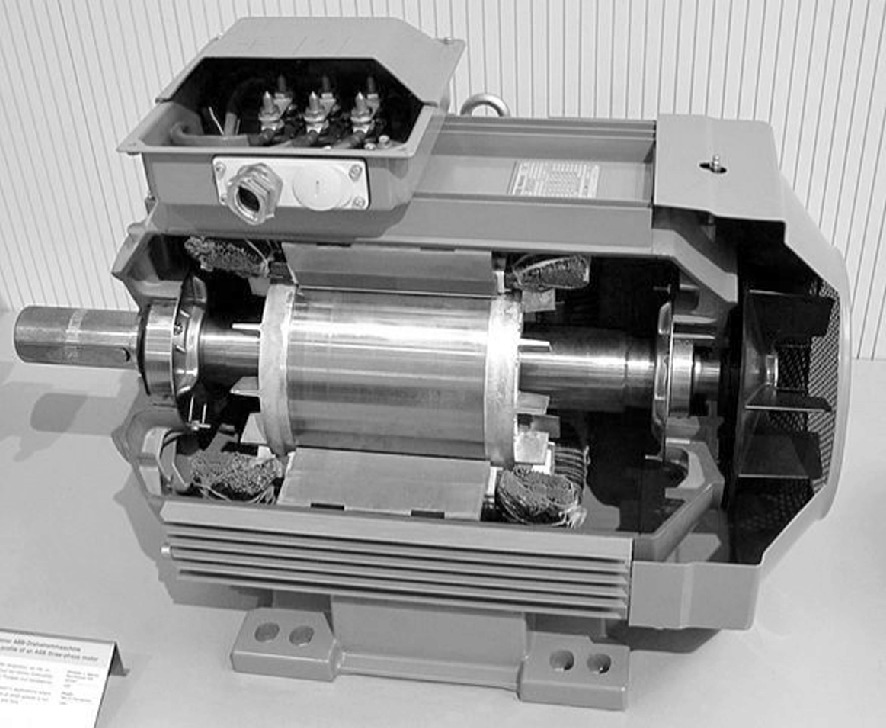
Fig. 9.1 Asynchronous machine. Source from wikicommons under free to use license [1]
练习题
What is the most characteristic feature used to classify asynchronous alternating current machines?
An asynchronous machine can reach synchronous speed if it operates under ideal conditions with no load.
Another term for asynchronous machines is "___ machines."
Which of the following statements about asynchronous machines are correct?
How is the excitation current produced in an asynchronous machine?
Asynchronous machines require an external excitation system, similar to synchronous machines.
The main components visible in the cross-section of an induction machine include the armature, the ___, and the stator.
Explain why an asynchronous machine can never reach synchronous speed during normal operation.
A three-phase induction motor has an efficiency of 85% and delivers a useful mechanical power of 5 HP (1 HP = 736 W) on its shaft. What is the relationship between the electrical power consumed and the useful power?
Induction machines and asynchronous machines are two completely different types of electrical machines with different operating principles.
An induction motor is connected to a three-phase supply and operates with an efficiency of 85%. If the motor delivers 5 kW of mechanical power on its shaft, which statement correctly describes both the power relationship and the fundamental operating characteristic of this machine?
Unlike synchronous machines, an induction motor connected to a three-phase delta configuration does not require an external excitation system because the excitation current results from the emf induced by the interaction between the armature and the inductor.
In an induction machine, the power lost represents the difference between the active electrical power consumed from the network and the useful mechanical power, and this power loss includes Joule effect losses in the windings as well as losses from hysteresis, eddy currents, friction, and ventilation. However, a fundamental characteristic is that the machine ___ reaches synchronous speed during operation.
Explain why an induction motor's efficiency is always less than 100%, referencing both the types of power losses that occur and the fundamental operating principle that distinguishes induction machines from synchronous machines.
登录后解锁笔记、知识点解析、AI 问答
立即登录