正在学习
6.6 Energy Conversion in Electrical Machines
6.6 Energy Conversion in Electrical Machines
The most remarkable active components of the electrical power system are static and rotating AC electrical machines. The energy conversion process that takes place in power transformers occurs by means of the magnetic field (Fig. 6.9). The magnetic field through the magnetic core allows the change between A and B conditions.

Fig. 6.9 Energy conversion in power transformers. Source Own elaboration
This kind of machine requires a magnetic field to transmit and convert high-voltage, low-current energy into low-voltage, high-current energy, and vice versa. A magnetic field makes it possible to convert mechanical energy into electrical energy (Fig. 6.9). Generators require a primary energy source (such as, for example, water moving through a turbine). Then, kinetic energy transforms into mechanical energy. This mechanical energy turns the turbine which drives the generator´s rotor. In electricity generation is common the coupling of a Kaplan water turbine and an electric generator to convert the energy that the water contains (Fig. 6.10).
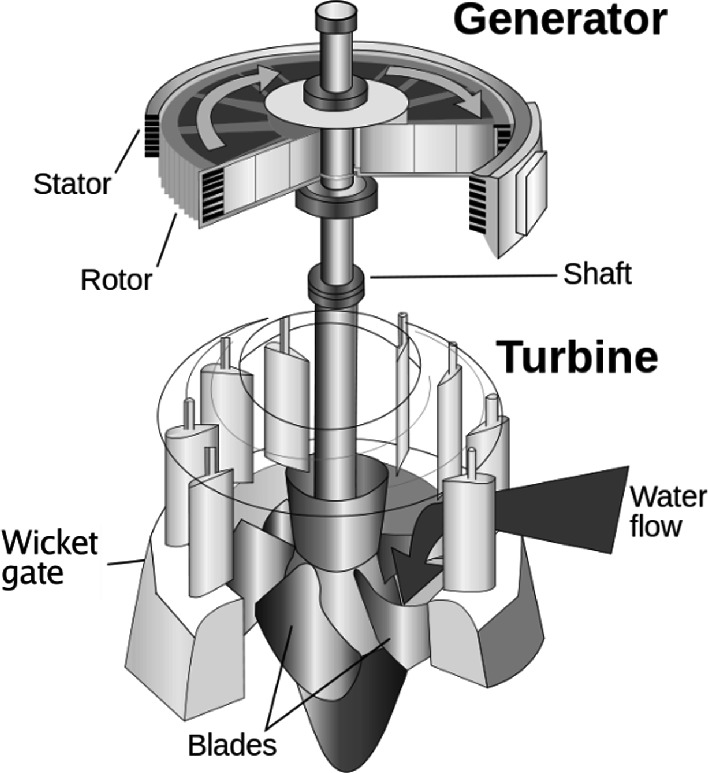
Fig. 6.10 Generator coupled to a Kaplan turbine. Source: PD-US Army. Source From wikicommons under free to use license [8]
On the contrary, the energy conversion process in a motor is the reverse of that described for generators. This machine uses the magnetic field to convert electrical energy from the grid into mechanical energy. This mechanical energy is what drives the rotor of the machine.
练习题
What medium enables the energy conversion process in power transformers?
In a power transformer, high-voltage, low-current energy can be converted into which of the following?
Which component of a hydroelectric system directly drives the generator's rotor?
Which of the following statements about the role of magnetic fields in electrical machines are correct?
In the energy conversion chain of a hydroelectric generator, which of the following stages correctly describe the process?
The energy conversion process in power transformers occurs by means of the electric field.
The energy conversion process in a motor is the reverse of that described for generators.
A power transformer can convert low-voltage, high-current energy into high-voltage, low-current energy while maintaining a constant frequency.
In a motor, the magnetic field converts electrical energy from the grid into ___ energy, which drives the rotor of the machine.
In a generator, the kinetic energy from the primary energy source transforms into ___ energy, which then turns the turbine that drives the generator's rotor.
Describe the complete energy conversion chain in a hydroelectric generator coupled to a Kaplan turbine.
Compare and contrast the energy conversion processes in motors and generators, including the role of the magnetic field in each.
A power transformer uses its magnetic core to convert high-voltage, low-current electrical energy into low-voltage, high-current electrical energy. Which two components of the transformer are essential for creating the magnetic field that enables this energy conversion?
In a hydroelectric power plant, water flowing through a Kaplan turbine causes the rotor of the generator to turn, and the generator's stator and rotor work together through a magnetic field to convert this mechanical energy into electrical energy.
Which of the following statements correctly describe the relationship between motors and generators in rotating electrical machines?
While a power transformer maintains constant ___ during energy conversion, it uses a magnetic field to change the voltage and current values. In contrast, a rotating machine such as a motor uses the magnetic field to convert electrical energy into mechanical energy that drives the ___ of the machine.
登录后解锁笔记、知识点解析、AI 问答
立即登录