正在学习
3.9 Inductance Behavior
3.9 Inductance Behavior
Except for some transient moments, when we directly apply direct current to a coil is similar to a resistor having a resistance equals to its own internal resistance. A circuit containing a switch, a coil, and a voltage source is a R-L circuit (Fig. 3.21).
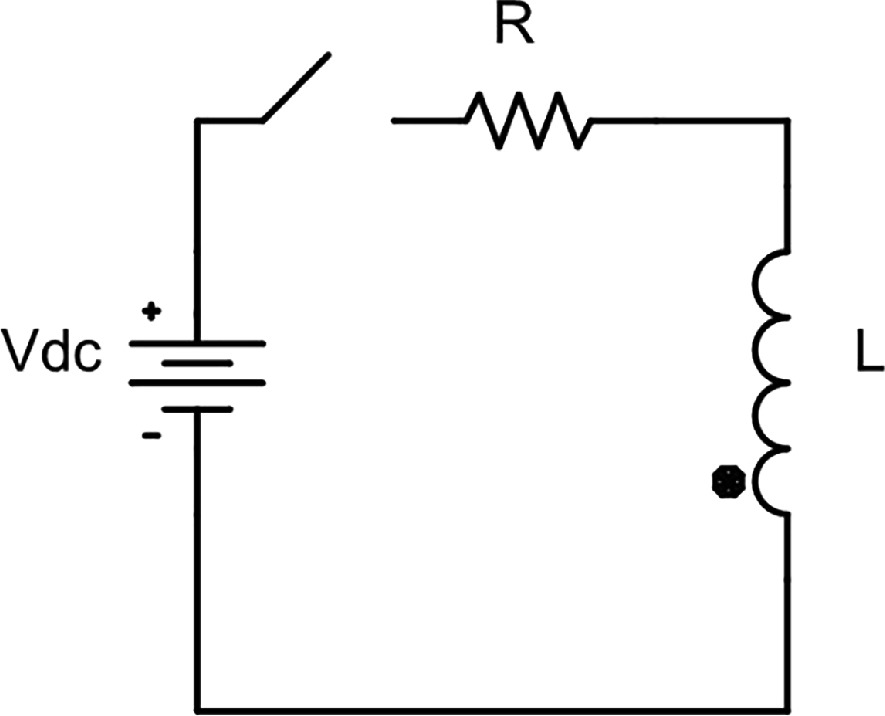
Fig. 3.21 Inductive R-L circuit. Source Own elaboration
Let us now examine the transient behavior of an inductor in a DC circuit. This will give us an insight of how alternating current circuits operate.
Recalling , Where Φ represents magnetic flux and "e" denotes the emf generated (lower case because is a variable magnitude). This is how we explain the relationship between the two:
(3.22)
We have:
(3.23)
Since L is constant. The result is:
(3.24)
Upon closing, a self-induced current appears which opposes the flow of current that generates it.
练习题
When a direct current is applied to a coil and all transient effects have subsided, how does the coil behave?
Which of the following components are required to form an R-L circuit as described in the text?
The induced electromotive force (emf) in an inductor is directly proportional to the magnitude of the magnetic flux passing through it.
The magnetic flux through an inductor is proportional to the current flowing through it, as expressed by .
The self-induced electromotive force in an inductor is given by the equation e = ___ \cdot \frac{di}{dt}, where the negative sign indicates that the induced emf opposes the change in current.
When a switch in an R-L circuit is closed, what happens to the self-induced current in the coil?
Why is it useful to examine the transient behavior of an inductor in a DC circuit?
The equation is valid because inductance L is assumed to be constant.
Which of the following statements correctly describe similarities or differences between capacitors and inductors?
Starting from and , which sequence correctly derives the self-induced emf equation?
登录后解锁笔记、知识点解析、AI 问答
立即登录