正在学习
14.4.3 Risk of Model Combinations
14.4.3 Risk of Model Combinations
We use the BIC to compare the choice between using a single model versus a combination of models. Specifically, we compare the outcomes when the BIC is used to select a single model against the result when the BIC is used to compute model combination weights, described below in (14.35). Consider the experiment in chapter 6, in which the data-generating process has eight uncorrelated regressors, three of which have coefficients that are local to 0—with parameter values shown on the x-axis in figure 14.12. The remaining five coefficients are 0. Risk functions under MSE loss are reported for four methods: (i) the correctly specified regression with coefficients estimated by OLS—this is the lower flat line; (ii) an approach that includes all eight variables in an OLS regression—the higher flat line; (iii) the forecast model selected by the BIC with parameters estimated by OLS—the humped line; (iv) the combination of all possible models using BIC weights and OLS estimation—the quadratic-looking line.
The shapes of the risk functions are as expected. Selection by BIC does well when all coefficients are 0, and also when the coefficients are large enough that the BIC reliably picks the correct model. Between these cases, the risk of the BIC approach is quite high, however, as discussed in chapter 6. The shape of the risk function is also as expected for the BIC-weighted combination. When all of the coefficients are 0, this approach puts large weights on the smaller models. As the coefficients become larger, the combination approach continues to place substantial weight on models that are not good predictors, and so the risk becomes large. The results show that the model selection and model combination methods differ both when the coefficients are near 0 and when they are further away from 0. Averaging effectively removes the hump from the risk function caused by the selection of a single model, but at the expense of doing poorly when the true model begins to reveal itself.
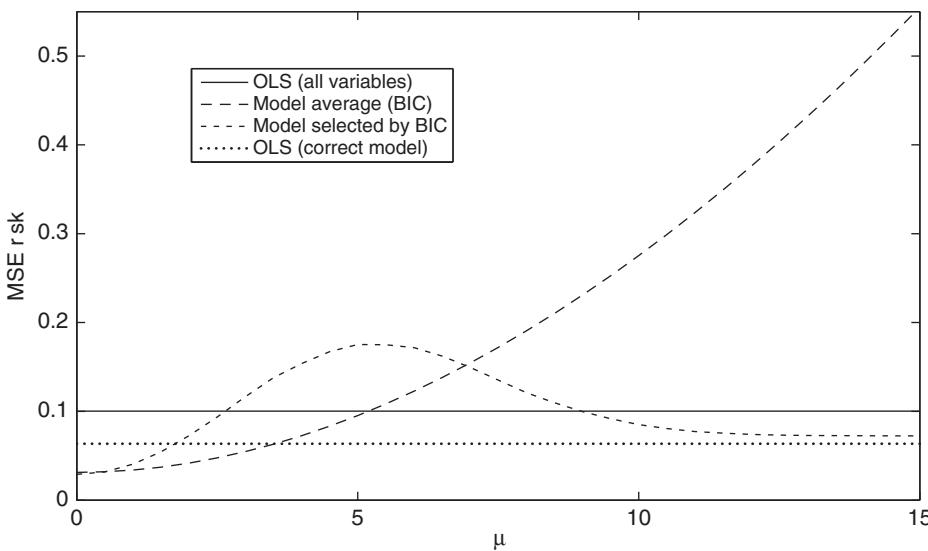
Figure 14.12: Risk for different model combination strategies.
练习题
When using BIC to compare a single model versus a combination of models, what is the purpose of computing model combination weights?
In the experiment with the data - generating process having eight uncorrelated regressors, how many of these regressors have coefficients that are local to 0?
Which of the following methods have risk functions under MSE loss reported in the text? (Select all that apply)
What are the characteristics of the risk function shapes for BIC selection? (Select all that apply)
When all coefficients are 0, the BIC - weighted combination approach puts large weights on the larger models.
Averaging effectively removes the hump from the risk function caused by the selection of a single model and also performs well when the true model begins to reveal itself.
The experiment in chapter 6 has a data - generating process with eight uncorrelated regressors, and the remaining five coefficients, apart from the three local to 0, are ___.
The risk function for the forecast model selected by the BIC with parameters estimated by OLS is described as the ___ line.
Explain the difference between model selection and model combination methods in terms of coefficient values.
How does averaging affect the risk function caused by single - model selection, and what is its drawback?
Which of the following statements is true about the risk function of the BIC - weighted combination approach as coefficients change?
Combining knowledge from this section and the prior section on complete subset regressions, which of the following are true about model combination approaches? (Select all that apply)
In an experiment with eight uncorrelated regressors where three have coefficients local to 0 and five have coefficients of 0, which method would likely have the lowest risk when the coefficients are large enough for the BIC to reliably pick the correct model?
When considering the risk functions of model selection and combination methods in an experiment with eight uncorrelated regressors (three with local - to - 0 coefficients and five with 0 coefficients), which of the following statements are correct?
In an experiment with eight uncorrelated regressors (three with local - to - 0 coefficients and five with 0 coefficients), the combination of all possible models using BIC weights and OLS estimation will always have a lower risk than the correctly specified regression with coefficients estimated by OLS when the true model begins to reveal itself.
In an experiment with eight uncorrelated regressors where three have coefficients local to 0 and five have coefficients of 0, the ___ method has a risk function that is humped when using BIC for selection.
登录后解锁笔记、知识点解析、AI 问答
立即登录