正在学习
16.2.1 Expanding Estimation Window
16.2.1 Expanding Estimation Window
Expanding or recursive estimation windows put equal weight on all observations from the beginning of the sample to the point of the forecast, to estimate the parameters of the forecasting model. The following period, the same information plus the extra observation, , is used to update the model parameters and generate a new forecast. For this case the weights in equation (16.7) take the form
For linear regressions the recursive coefficient estimates simplify to
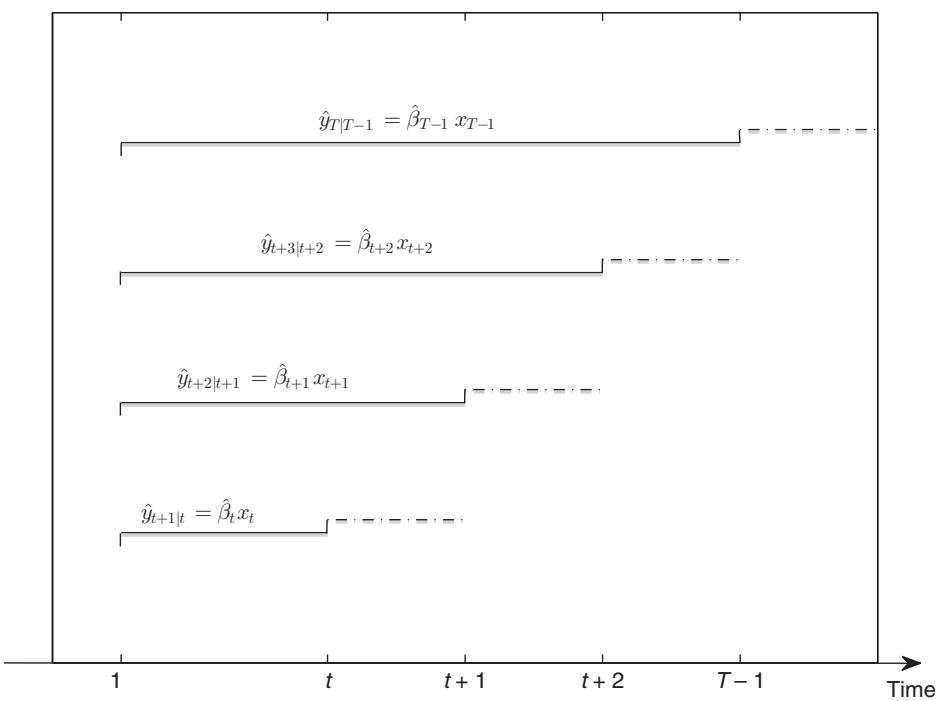
Figure 16.1: Estimation sample under an expanding estimation window.
As time progresses, the estimation sample grows larger, and so the expanding window approach mimics what many forecasters are likely to do in practice. Figure 16.1 illustrates this case.
In a stationary world where the parameters of the DGP do not change, the expanding window approach makes efficient use of the data and leads to consistent parameter estimates. Conversely, in a nonstationary world in which the parameters of the model are subject to change, the approach leads to biased forecasts. However, the approach can still be difficult to improve upon due to its use of all available data which reduces the effect of estimation error on the forecasts. In empirical applications, producing relatively small parameter estimation errors often dominates the effect of reducing the (squared) bias, unless the change in the model parameters is very large. See Pesaran and Timmermann (2007) for an analysis of this issue.
16.2.2 Rolling Estimation Window
A rolling estimation window refers to the practice of using an equal-weighted window of the most recent ω¯ observations to estimate the parameters of the forecasting model. For example, to generate a forecast of at time data is used for parameter estimation. As time progresses and new observations become available, older observations get dropped so that the size of the sample used for parameter estimation remains constant at Hence, at time , the observation at time is dropped, while the new data point at time t + 1 is added, so the updated data set is used to generate a forecast of . The rolling window weights in (16.7) are rectangular
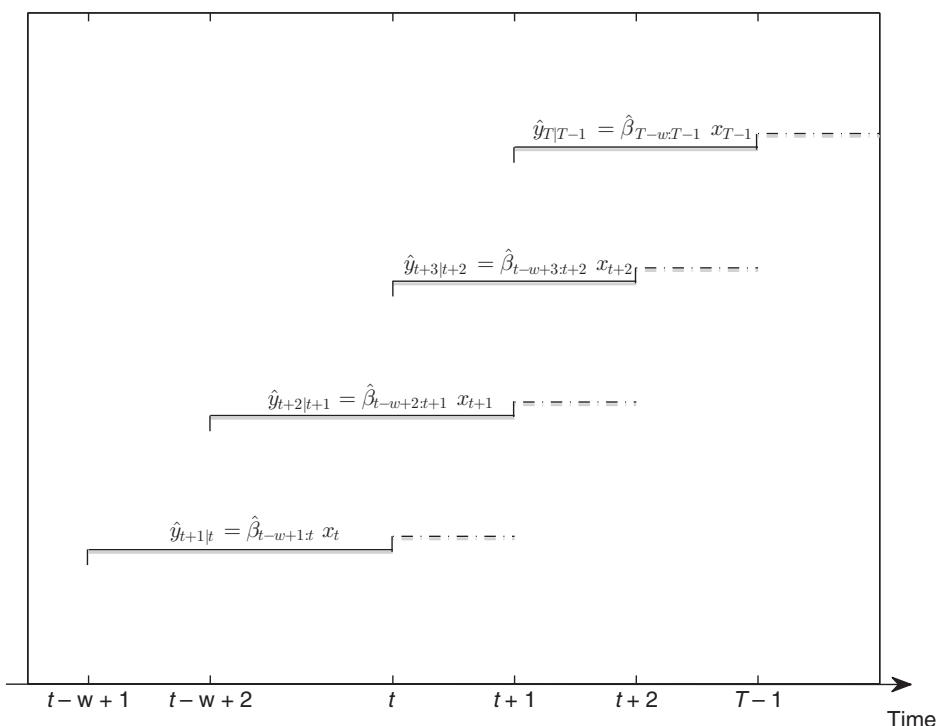
Figure 16.2: Estimation sample under a rolling estimation window.
and take the form
For a linear regression model this yields coefficient estimates,
Figure 16.2 illustrates this case.
The rolling window estimation method requires choosing a single parameter, namely the length of the estimation window, ω¯ . This is commonly set to some fixed number, e.g., 5, 10, or 20 years of observations in the case of monthly or quarterly data. Alternatively, one could use cross-validation methods to optimize over the value of ω¯ , but this is rarely done.
The rolling window method is typically used when forecasters are not convinced that the underlying DGP is stationary and so do not want to “contaminate” the model forecasts too much by basing them on old and potentially irrelevant data. The practice of dropping past data comes, however, at the cost of using parameter estimates that fluctuate more than under the expanding window scheme and so typically parameter estimation error is a greater concern for the rolling window method. Moreover, it is not possible to write down a general DGP under which it is optimal to use rolling window estimation, which complicates decisions on when and whether to use this approach versus other approaches designed to handle nonstationarities.
练习题
What is the key characteristic of an expanding estimation window?
Which of the following represents the weights in an expanding estimation window?
What are the advantages of using an expanding estimation window in a stationary world?
In a nonstationary world, the expanding estimation window approach leads to unbiased forecasts.
The recursive coefficient estimates for linear regressions in an expanding estimation window are given by . What is the range of in the sums?
Explain why the expanding estimation window approach can still be difficult to improve upon in a nonstationary world.
What defines a rolling estimation window?
Which of the following represents the weights in a rolling estimation window?
What are the concerns associated with the rolling window method?
The rolling window method is typically used when forecasters believe the underlying DGP is stationary.
The coefficient estimates for a linear regression model using a rolling window are given by . What is the range of in the sums?
How is the length of the rolling estimation window typically chosen?
Which of the following statements are true about the expanding and rolling estimation windows?
Compare the impact of nonstationarity on forecasts generated using expanding and rolling estimation windows.
Which of the following statements correctly describes the difference between expanding and rolling estimation windows in forecasting models?
Which of the following statements are true regarding the coefficient estimates for linear regression models using expanding and rolling estimation windows?
登录后解锁笔记、知识点解析、AI 问答
立即登录