正在学习
14. Step Two: Align (1)
14. Step Two: Align (1)
Get AI to Truly Serve You
Identify where and how AI can be meaningful to you, and run focused experiments to discover a specific breakthrough “aha” use case.
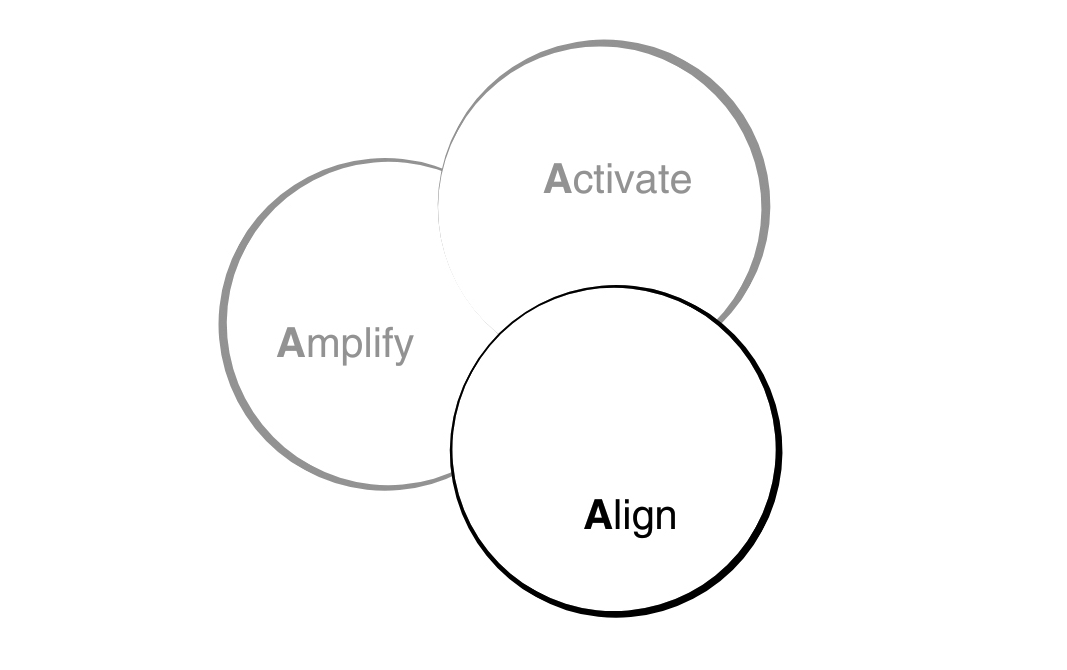
Now that you’ve got your hands in AI and have a feel for the kinds of things it does, it’s time to discover how AI can truly serve you. The goal is to get to an “aha” moment—a real, bona fide use case of how AI can genuinely enhance your life in a meaningful way. This work consists of two stages. The first is to Focus your attention on a specific challenge; the second is to Experiment with solutions to this challenge:
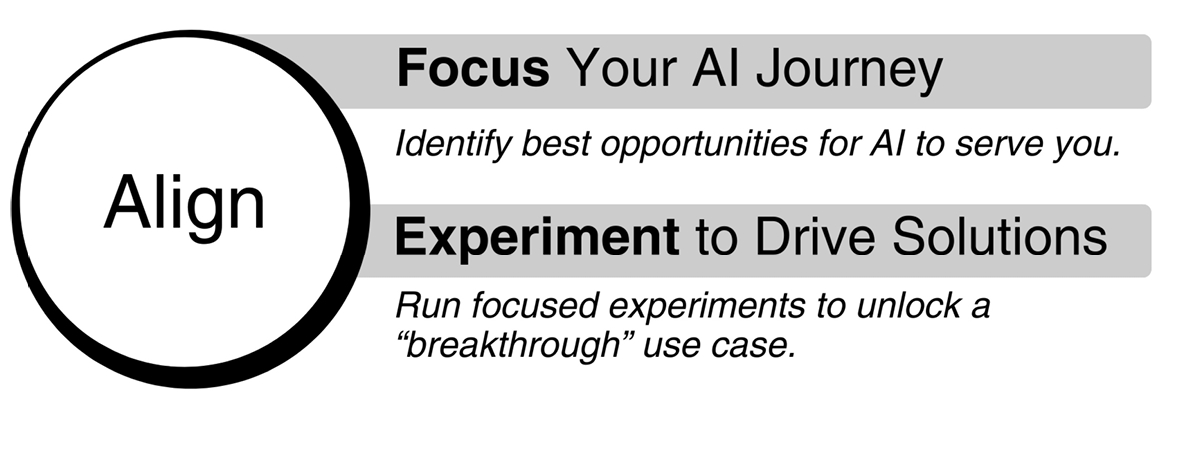
This step transforms the essential early adopter practice of rapid experimentation into a structured process that points you directly to valuable use cases. To align your needs to AI’s capabilities, you’ll embark on a thoughtful discovery process that reveals opportunities unique to you. It demands some deep thinking about what would help you to take the things you do (whether personal or professional) to the next level. I know this emphasis on self-reflection can feel strange—we are talking about working with software, after all. Even the language I use here may feel surprising at first. But stick with me here: this focused approach drives you much faster to value.
From Fixed Functions to Fluid Intelligence
Traditional software helps us with well-defined tasks that need consistent, predictable answers. We compile sales figures using reporting tools, track project deadlines using project management tools, and analyze website traffic patterns using analytics tools.
In contrast, because AI is a broad intelligence trained on a vast corpus of human knowledge, it can help us with open-ended goals and even loose objectives in virtually any area. It can interface with us at different levels of sophistication—from simple kindergarten-level language to something that looks as if it could come from someone with a PhD.
This open-ended opportunity is exciting, but it’s also why many find it hard to use AI well. We’re not used to deeply contemplating where and how to apply our software, which is a big reason some people get frustrated and quit before they see how useful AI can really be. But when you start by really considering your true needs, you’re setting a foundation to discover how AI can bring you real and important benefits in any role you play, from career to family life, regardless of your profession or personal goals.
A Personalized Journey to Success
We’re all arriving at this moment with our own unique blend of strengths and weaknesses. Each of our lives is filled with its own kaleidoscope of demands, goals, and responsibilities. And AI is always evolving, so it’s hard to predict where it works well, and where it doesn’t. These are all reasons why no one can hand you a template or point you to a user manual that will tell you how to best use AI.
While there is plenty of inspiration to be found in others’ successes, achieving results is a unique journey for each person or team—and practice and experimentation are the most effective ways to drive a win.
The process I walk you through in this chapter guides you in finding a match between your needs and AI’s capabilities—and develops your skill in tapping into those capabilities.
This process is designed to deliver tangible results quickly. That said, you may find you don’t need to go through all these steps and after a quick scan feel ready to dive into the “Experiment” stage. If that’s you, please do—the sooner you start experimenting with AI to address real needs, the faster you’ll see results. However, for those less comfortable with AI tools, taking time to fully go through each part of the process can be beneficial.
Focus Your AI Journey
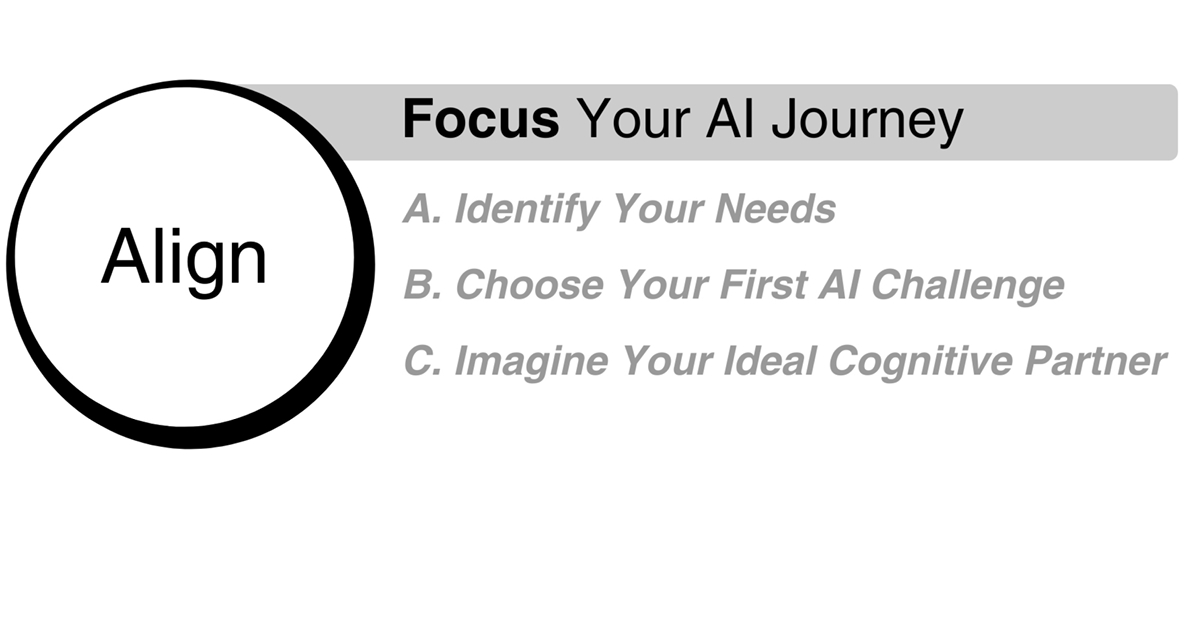
The first stage is to focus your efforts on addressing real needs—areas where AI assistance can significantly impact your life or help you overcome barriers to higher performance. This section takes you through a three-part process to sharpen your focus. The more introspective and thorough you are in this approach, the more targeted and productive your AI experiments will be.
Starting with real needs serves an additional purpose. It raises the bar and sets higher expectations for your interactions with AI. This mindset shift can help overcome preconceptions that might limit your exploration. By setting ambitious goals for what AI can deliver, you’ll be motivated to push harder, increasing your chances of achieving a meaningful breakthrough. Remember, the more you demand from the technology, the more likely you are to uncover its true potential and value for your unique situation.
I’ve found that those who are most successful with this discovery process carve out time in an environment where they can think expansively. They’re capturing their thoughts without self-censorship or judgment. Some even find it helpful to journal to uncover deeper insights.
A. Identify Your Needs
First, allocate focused time for brainstorming and begin compiling a list of specific needs, challenges, or aspirations that could potentially benefit from AI assistance. Look beyond current pain points to include future goals and aspirations. Consider any areas where you could benefit from enhanced capabilities, efficiency gains, or a cognitive boost.
To guide your exploration, ask yourself these questions:
练习题
What is the main goal of discovering how AI can serve you?
What are the two stages of work for AI use?
What are the differences between traditional software and AI capabilities? (Select all that apply)
It is easy for most people to use AI well because of its open - ended opportunities.
When you start by really considering your true needs, you’re setting a foundation to discover how AI can bring you real and important benefits in any role you play, from career to family life, regardless of your ___.
Why is there no template for using AI?
What is the most effective way to achieve results with AI?
What does the process for matching needs and AI capabilities do? (Select all that apply)
Starting with real needs in the AI journey only helps in personal life, not in professional life.
Those who are most successful with the discovery process carve out time in an environment where they can think ___.
What should you do first when identifying needs for AI assistance?
Which of the following are benefits of considering true needs for AI benefits? (Select all that apply)
When trying to discover how AI can serve you, what is the key difference between traditional software and AI capabilities that you should consider?
What are some steps or considerations that can help you in the process of aligning your needs with AI capabilities? (Select all that apply)
The PlayLab is only useful for understanding the technical aspects of AI and has no relation to the process of aligning your needs with AI capabilities.
Explain how considering true needs can help in the process of discovering how AI can serve you.
登录后解锁笔记、知识点解析、AI 问答
立即登录