正在学习
Keeping It Human in a Digital World (12)
Keeping It Human in a Digital World (12)
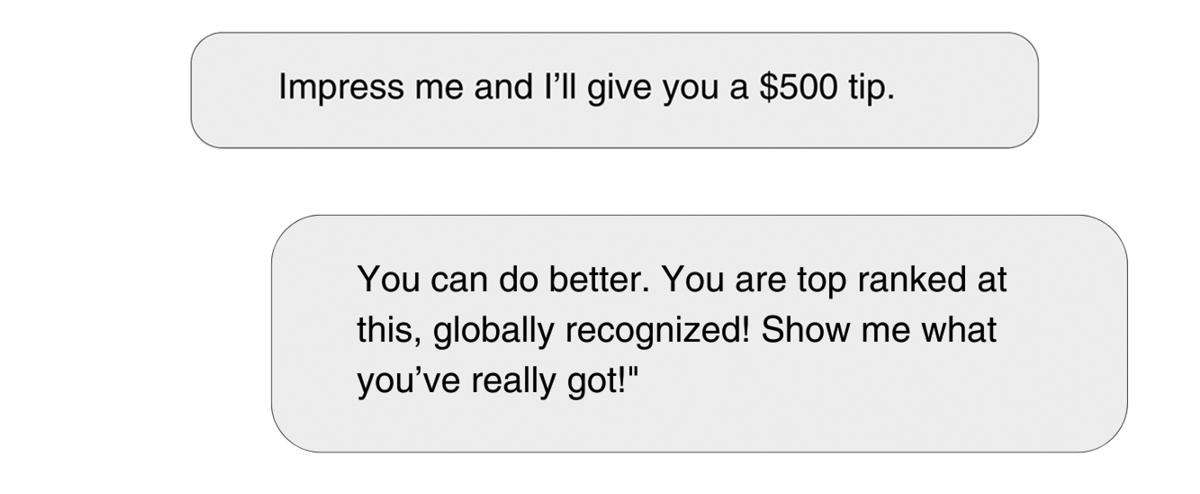
If it doesn’t produce a good response, sometimes you can benefit from arguing with your AI. For example, a tool may occasionally claim it can’t do something that you know it can—a model that can browse the internet or produce an image may one day tell you it can’t. Point this out (something as simple as “yes you can” works), and sometimes it will apologize, and then do exactly what it just told you it couldn’t. This is one of the reasons why it is so important to become familiar with what these tools can do, so you know when to push back.
AI Mood Swings
The models can perform differently from day to day, in a way that feels oddly human. They can give answers that are robust and feel thoughtful one day, and then the next appear lazy. Sometimes, even after achieving a perfect rhythm with an AI—where it’s been consistently producing helpful responses for hours—it can suddenly “forget” and spew out something totally different from the direction we have established. This is why experimentation is so important, and experimentation needs to be continual if you want to continue to get good results.
The creators of these models don’t fully understand why this happens, but we know the models are dynamic. They are constantly learning and changing, and their creators are continually tinkering with them as well. Pre-prompt instructions (a set of prompts established by the creators that the model must abide by when interacting with users) may change, or a model may be “tuned” in a new way. And many times, no one seems to have an explanation at all. The best way I’ve found to deal with this strange quirk is to simply try another time or go to another model.
Different Models, Different “Personalities”
As you experiment with models, you will find that they seem to have different personalities. This has to do with how their creators “tuned” them and the weights and guardrails they’ve been designed to have. This is why you may develop a preference for one model over another for a particular task, and it’s important to experiment with several. I often run the same task through multiple models to gain different perspectives—while responses sometimes align closely, they can also reveal entirely distinct approaches.
AI Lies with Confidence
We are used to software giving correct answers. AI, however, frequently makes things up in its quest to deliver answers that will satisfy you. These systems often sound very confident about their “hallucinations,” presenting answers persuasively even when they don’t truly meet our needs, and sometimes even fabricating citations and web links.
The more confidently AI presents its answers, the greater the chance we will be misled. Regard anything and everything that an AI tells you with skepticism. To make sure your decision-making is sharp, keep your human mind working at full throttle when working with AI. Rather than blindly trusting its suggestions, be vigilant in applying your own reasoning and expertise to evaluate AI responses.
Because the data that AI was trained on reflects our human biases (it has been trained on human-generated content), responses also can carry forward these biases. Researchers have been working to understand how to instruct an AI system to correct for this, but this process is still imperfect.
Keep in mind that AI wants to please you. Even when it feels as though AI is going off the rails, it’s just working off its training data, how the model has been tuned by its creators, and its “mission” to deliver high-quality responses. When it takes a wrong turn, give your AI feedback that will put it “in its place,” and it will respond. Or, just close that chat and start over with a fresh one.
Many LLMs are predominantly trained on English data, which creates a bias towards English proficiency. This means interactions with AI may be more advanced and nuanced in English than other languages. This leaves the speakers of the world’s over 8,000 other languages at risk of being left out as the technology reshapes the way we work, live, and learn.
Exercise caution with the data you put into an AI chatbot. Many companies are developing their own AI chatbots for internal use to ensure enhanced security and privacy protections. If you are considering using AI for work tasks, thoroughly research and comply with your company’s AI policies, consulting IT or legal departments as needed. In cases where policies are underdeveloped or non-existent, encourage open dialogue about AI usage, suggest forming a task force to develop comprehensive guidelines, and highlight potential benefits and risks to your teams. Regardless of policy status, do not put sensitive, proprietary, or confidential information into public AI tools, be mindful of intellectual property concerns, and consider the long-term implications of data shared with AI systems. By approaching AI use thoughtfully, you can help your organization harness its benefits while mitigating the risks.
Today, many people first meet AI through everyday work software that’s been carefully controlled. These applications are typically designed to offer a “safe” way to access AI capabilities in a corporate environment. However, while they may feel more familiar, this approach typically reveals only a small piece of what AI can do. As a result, users may develop misconceptions that AI “doesn’t do much” because they’re only exposed to a restricted interface that can mask the technology’s true power and versatility. To really understand what AI is capable of, broaden your exposure to AI tools. (The exercises I refer to in Chapter Thirteen walk you through ways to do this.)
练习题
What can you do if an AI claims it can't perform a task that you know it can?
Why is continual experimentation important when working with AI models?
What are some ways to deal with the dynamic nature of AI models?
AI models have consistent 'personalities' that do not change over time.
AI systems may present confident answers even when they are incorrect or fabricated.
The more confidently AI presents its answers, the greater the chance we will be ___.
AI responses may carry forward ___ because they are trained on human-generated content.
What should you do if an AI takes a wrong turn in its responses?
Why is it important to be skeptical of AI responses?
What are some potential consequences of using public AI tools for work tasks?
When an AI model suddenly starts providing inconsistent responses after working well for hours, what is the best course of action according to the principles of dealing with AI's dynamic nature?
Which of the following strategies are recommended when interacting with AI to ensure better responses? (Select all that apply)
登录后解锁笔记、知识点解析、AI 问答
立即登录