正在学习
Keeping It Human in a Digital World (10)
Keeping It Human in a Digital World (10)
We all know good human relationships depend on good communication. In fact, how well two people communicate is one of the best predictors of whether they can establish a successful and productive relationship.1 Surprisingly, your relationship with AI follows this same principle.
The better you communicate with AI, the better your results.
This is because AI was trained by ingesting vast volumes of content created by humans. In this way, it learned our language and a lot about the nuance, intent, and depth underlying our communication. And so now, getting the most out of AI means having a conversation that feels strangely human—but with a few important twists.
The Best Part? You Already Speak AI
The good news is that you already know the basics. You don’t have to take a class, you don’t have to learn to code, and you don’t have to look up commands in a user manual. We all can tap into the power of AI simply by speaking or writing in the same language we use every day, especially if we are English speakers.[i] Or, you can choose to communicate visually by drawing a sketch, sharing a photo, or even giving AI access to your camera so it can see your expressions, the room you are in, and the objects in front of you.
While AI is increasingly embedded in software that you may have used for years, the most direct way to experience frontier AI models today is through chatbots provided by their creators.[ii] This interface might be unpolished but connects you more closely to AI’s power.[iii] There are many chatbot options to choose from, and you can find links to these on my website.
The building blocks of AI communication are the requests, or “prompts,” we make into the system. An entire field called prompt engineering has sprung up to optimize these instructions. Prompt “influencers” have also proliferated online, hawking special formulas that can, at times, sound more like sorcery than conversation. Some of their approaches offer inspiration and are worth a try, but I’ve found that all the noise can be overwhelming to people. AI works best as a natural conversation; it’s rapidly getting better at understanding our intent on its own, and you can even ask AI for help along the way. For these reasons, most people learn fastest and get better results when they ignore formulas, charts, and spells and instead dive in, learning through hands-on experience and direct conversations with AI.
That said, there are a few fundamentals and techniques that make these conversations most productive, and this chapter walks you through both. I will be covering this in two sections that go hand in hand. First, we’ll talk about the fundamentals that underlie a productive relationship with AI. Then, I’ll share some practical advice on having useful dialogues with AI by taking you through prompting basics.
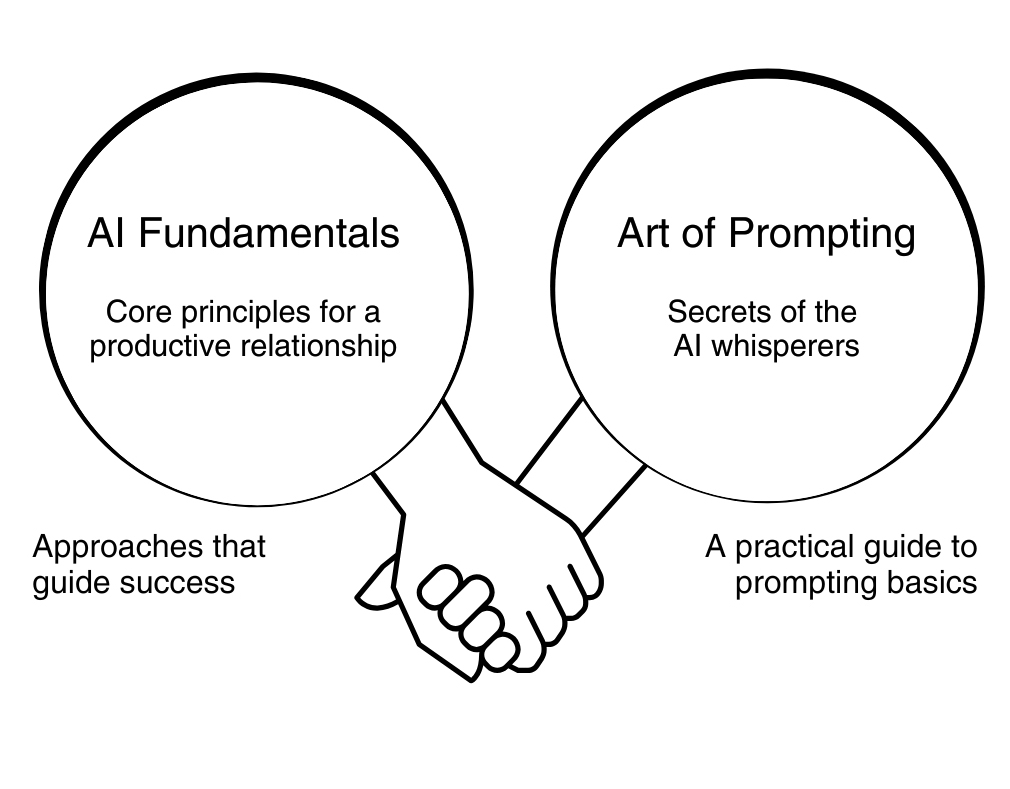
AI Fundamentals: Core Principles for a Productive Relationship
The journey to AIQ requires not only gaining experience in prompting the tools, but also understanding the underlying principles that help us tap into AI as a valuable collaborator. This section explores principles that shape a foundation for lasting success.
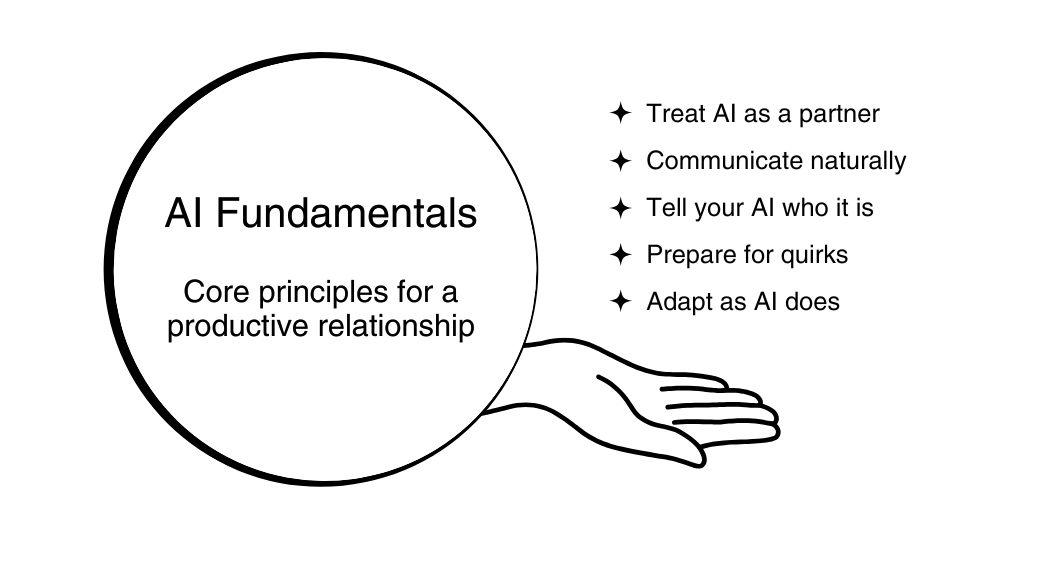
Treat AI as a Partner
Work with AI as if it’s a thought partner that learns about your needs and preferences over time.
One of the hardest things for people to wrap their heads around is how AI works best as a collaborator. Traditional software delivers a definitive and (assuming it’s well-tested software) correct answer, the same answer every time. Conversely, AI is always changing. It’s continually trying to understand what you want and refining its responses accordingly. It will even give you a different answer if you ask it the same question twice.
This is why feedback makes AI work better. Think of this like the back-and-forth that happens when you work with a team member to develop or hone a concept or project. It’s as if you are learning and exploring together.
AI works best when you have a “discussion” in which each party, you and the AI, continually refines “thinking,” gives or responds to feedback, and asks clarifying questions. My research revealed that a key reason newcomers fail to extract value from AI is that they frequently settle for an AI’s first response instead of engaging in deeper dialogue to achieve responses that add significant value to their work.
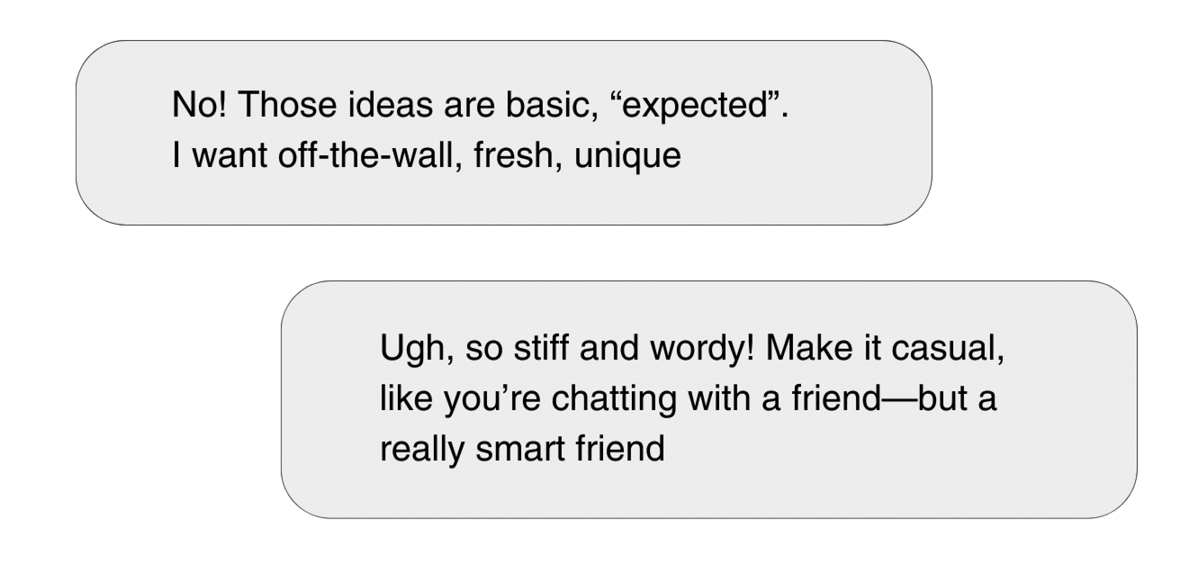
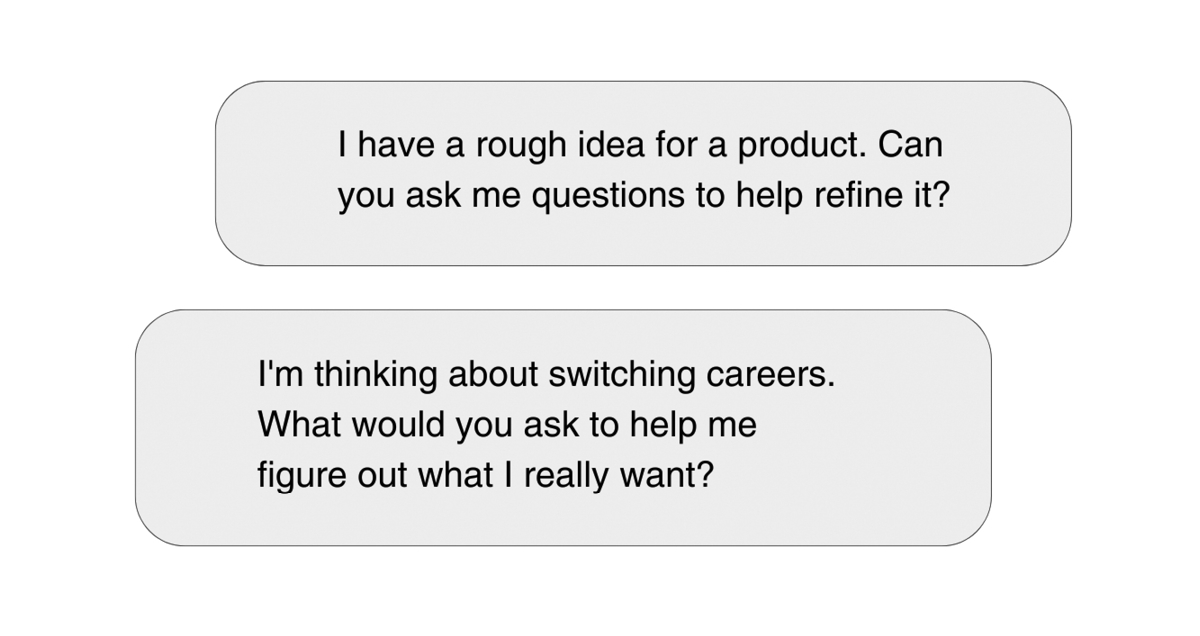
When a team member doesn’t get something right, you would tell them. Do the same with AI, and you will see it respond to your guidance. Experiment with probing how AI will approach a problem before you ask it to solve your challenge, just like you might with a respected colleague. Or ask AI to ask you questions to refine your thinking.
When you bring on a new team member, you may help them succeed by providing them with product manuals, samples of your writing style, or policies and training guides. AI is no different—the more background information you give, the more successfully it will respond. You can upload digital material in many formats directly to many AI chatbots.
练习题
According to the text, what is one of the best predictors of establishing a successful and productive relationship between two people?
How did AI learn human language and nuance?
What is the most direct way to experience frontier AI models today?
What are some ways to communicate with AI according to the text?
AI always provides the same answer to the same question every time it is asked.
AI works best when treated as a definitive and unchanging source of information, similar to traditional software.
The building blocks of AI communication are the requests, or '___', we make into the system.
When you bring on a new team member, you may help them succeed by providing them with product manuals, samples of your writing style, or policies and training guides. AI is no different—the more ___ information you give, the more successfully it will respond.
Explain why feedback is important when working with AI.
What is the recommended approach to learning how to communicate effectively with AI?
Which of the following are core principles for a productive relationship with AI? (Select all that apply)
What is the main reason why newcomers fail to extract value from AI?
Engaging with AI now will only provide immediate gains in productivity and performance, with no long-term benefits.
The A3 Framework emphasizes principles of structured thinking and systematic improvement to help anyone develop their ability to ___ with AI.
When interacting with AI, why is it important to treat it as a partner rather than traditional software?
Which of the following are effective strategies for improving communication with AI? (Select all that apply)
AI's ability to understand nuance and intent in communication is a result of its training on vast volumes of human-created content.
To achieve better results with AI, it is recommended to engage in a ___ with AI, refining thinking and providing feedback.
Explain why providing background information to AI is important for effective communication.
登录后解锁笔记、知识点解析、AI 问答
立即登录