正在学习
Pain, Perspective, and Hidden Protection
Pain, Perspective, and Hidden Protection
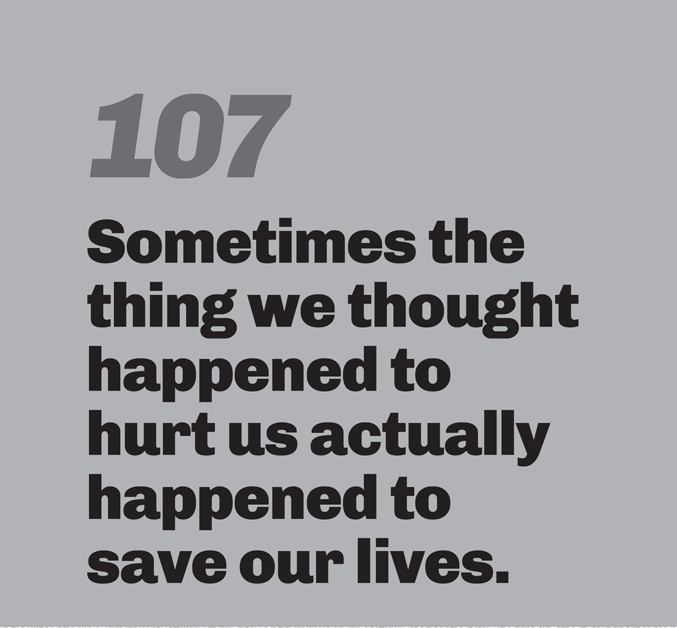
There once was a very important man who was leading during a crucial turning point in history. Stressed. Overworked. At the end of himself, he allowed himself to take a quick break with his family for a carriage ride through town. Little did he know, this little break would break him apart and almost kill him. The horses would startle, lose control, and this man would be thrown from the carriage, breaking limbs and his jaw. This was the worst possible thing to happen at the worst possible time, as the conclusion of a terrible war hinged on the next few days and weeks.
His injuries were so bad, that he remained bedridden, forcing the president of the United States to come visit him in his room so that they could meet. The man in the bed struggled to speak to the president through the large apparatus holding his jaw together. This was the worst thing to happen at the worst time. Both he and the president had been through so many hard weeks and years together. They relied on each other as their country relied on them. The president lay next to this man in bed so they could speak.
Yet, little did both men know, this was the last time they would see each other. The gruesome Civil War in the United States appeared to be mercifully coming to an end. Secretary of State William Seward lay there bedridden, barely able to speak with his jaw encased, lifting up a weak hand goodbye as the president, Abraham Lincoln, lowered his head as to not hit it on the doorframe as he left the room, for the last time.
Five days later, Lincoln would be assassinated at Ford’s Theater. But what gets lost in history, is that a man named Lewis Powell broke into Seward’s house that night to assassinate him too. Powell was successful in every way. Getting past both a guard and Seward’s son, the intruder stood above a bedridden Seward, who lay alone, unable to move, completely defenseless. Powell wielded a large Bowie knife and came down on William Seward in the dimly lit room. Seward rolled off his bed. Seward’s daughter ran into his room, screaming that her father had been killed. There was no way he could’ve survived such an attack. But, miraculously, he did!
What was his saving angel that night? The large brace around his jaw from the carriage accident. The terrible accident from weeks before served as the perfect shield for Seward’s throat in his time of defenselessness.
Seward would miraculously recover from all his injuries and continue serving in the government. Not only did he play a crucial role in the reconciliation of a broken nation, he later famously became known for another incredible mistake. Or so most Americans called it at the time. The newspapers ridiculed him, calling the 7.2 million, which came out to about $.02 per acre, in hindsight became one of the most important investments in American history. “Seward’s Folly” secured an asset so valuable in economic and political worth that it truly is impossible to even put a number on the worth of that investment today. Yet, if it wasn’t for a broken jaw and brace saving Seward’s life, maybe Russia would still own Alaska today.
My point?
The pain you are going through now—the dead ends, missteps, trials, and tribulations—are incredibly real, and yet we don’t have the proper perspective for them yet. We don’t have the hindsight for our current hurts. After the carriage accident, I bet William Seward cried out to God many times, asking Him why He would allow this accident to happen at the worst possible time. Yet, his brace, his brokenness became his protective barrier.
We are so quick to label things a triumph or a tragedy, an utter failure or smash success, and yet we don’t see clearly. We don’t have the lens of eternity to look through to see how all these broken threads are somehow being woven together for our benefit. In my life, this is where faith, hope, and belief become my guide to cling to. To trust that things are working together for my good, even when things look and feel anything but.
What was meant for my harm was just some ugly wrapping paper, hiding an incredible gift inside. I just can’t see it yet.
Someone can tackle you to hurt you. Or someone can tackle you because bullets were whizzing overhead and they were saving your life. The pain of the fall might be the same, but the perspective of knowing what the fall was for, well, that changes everything.
What you see as a failure now might save someone’s life later.
Don’t get me wrong, when you’re going through the pain, it’s painful. Excruciatingly so. I know I don’t see and understand clearly. So as cliché as it might sound, I must keep my eyes on someone who does. Who sees the beginning, middle, and end. That’s who I want guiding me through those painful moments when I don’t know how it’s all coming together.
练习题
In the story, why did William Seward’s carriage accident later appear different in hindsight?
Which statement best captures the author’s lesson from the example of being tackled while bullets are flying overhead?
Which ideas are supported by the section? Select all that apply.
Seward’s broken jaw and the brace around it are presented as examples of how brokenness can become protection.
The section teaches that because pain may later have a purpose, present suffering is not real and should be ignored.
The purchase of Alaska was mocked as “___,” even though it later became one of the most important investments in American history.
How does Seward’s story illustrate the claim that “current pain lacks the clarity of hindsight”?
How can the section’s message about trusting a wider perspective during pain be combined with the earlier idea that reliving pain can intensify suffering?
Which response best reflects both this section’s warning about labeling events too quickly and the prior section’s warning that shame and regret should not drive life?
The section suggests that what looks like a failure in the present might later become part of saving or helping someone else.
A person experiences a painful setback and keeps replaying it with anger, assuming it can only be a tragedy. Which response best combines the lesson from Seward’s story with the earlier teaching on hurt?
Which statements accurately combine the lesson of Seward’s apparent disaster with the earlier warning about passion and obsession?
Because Seward’s brokenness became a protective barrier, the author’s view would also support the idea that forgiving someone means allowing that person to keep harming you.
The Seward story teaches that present pain often lacks the clarity of ___, while the earlier forgiveness section warns that repeatedly reliving pain can intensify suffering.
登录后解锁笔记、知识点解析、AI 问答
立即登录