正在学习
Call Center Crisis and Changing the Sad Playlist
Call Center Crisis and Changing the Sad Playlist
What do I mean? Well, to explain let me take you to a call center.
CALL CENTER CRISIS
In my opinion, the only difference between hell and a call center is the phones. (Unless the devil is sporting a smartphone these days.)
When you work at a call center you realize fairly quickly that when people call in it’s not because they want to chitchat or tell you about the amazing work your company is doing. No. They call because they have a problem. A life-shattering, comets-colliding, worlds-imploding problem that you’re to blame for.
And since our call center was wildly understaffed, every person I spoke to was usually waiting on hold for an hour. Oh, they were just as pleasant as a peach come summertime by the time they got to me.
THE CALL CENTER CHEF BEHIND ME
The only really nice thing about working at the call center was the solidarity and unity among coworkers based on one simple truth—we all hated our jobs. Every last one. But then I’d ask coworkers how long they’d been working there.
“Five years,” they’d say.
“Five years!” I’d respond. “Well, when did you first start hating the job?”
“Five years ago,” they’d say.
“Five years?” I’d respond.
Something about these conversations didn’t make sense.
Take Rosey, who sat behind me. She was about 45 years old, kind, energetic, and an amazing chef. The office parties where she brought carrot cake were the only times all calls were placed on hold.
But Rosey had been working at the call center for a long time and complained about the job with the same frequency as the incoming calls.
“Rosey, why don’t you quit this lousy job and pursue cooking?” I asked. “You’re an amazing chef. You hate it here. Why stay?”
“Oh, I tried pursuing cooking once,” she said. “But it was hard. Didn’t pay enough, you know? And I couldn’t catch a break. So I gave it up and started working here.”
“Well, I think you should give it another shot,” I said.
“No, no. That’s not for me anymore,” she said, putting on her headset. “I’m done with dreaming. Just gets your hopes up for no good reason. You’re young, but one day you’ll learn. Sometimes you’ve just got to say goodbye to the fairy tale and put on your grown-up pants.”
Right there at that moment, I vowed something.
I was never going to wear grown-up pants.
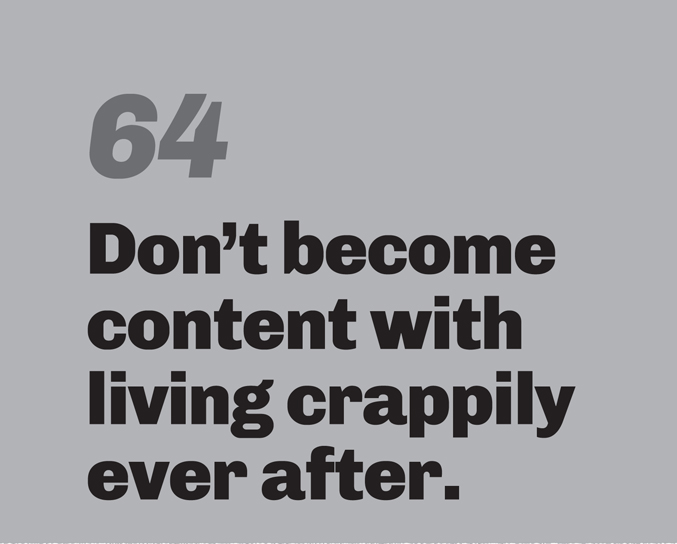
You see, the call center was filled with real-live-half-dead adults—people who are more comfortable with cruddy than they are with making a change for the better. They were fine living crappily ever after. I was not.
There are too many real-live-half-dead adults for you to join the ranks. So if at some point you want to accidentally drop your “grown-up pants” in a real live fire, you have my blessing.
I think some of us going through the struggle forget how NOT to be sad. We become so used to being stuck in a funk that we don’t know how to un-funk. Those sad songs that held us during all those long nights alone are still stuck on repeat because they’ve been the only friends we have known.
Now, don’t get me wrong. I love a good woodland coffee shop playlist as much as the next twentysomething. The kind where you feel transplanted into the middle of a drizzly Seattle day, sitting on a forest stump drinking espresso and wrestling with life’s hardest questions.
But I think many of us artificially keep ourselves in a funk because we keep listening to the same sad songs over and over and over—literally and figuratively.
Sometimes you just need to thank that sad song for your time together, but it’s time for you to go. You need to buy a one-way ticket and fly toward some sunnier skies.
It’s time to change that playlist.
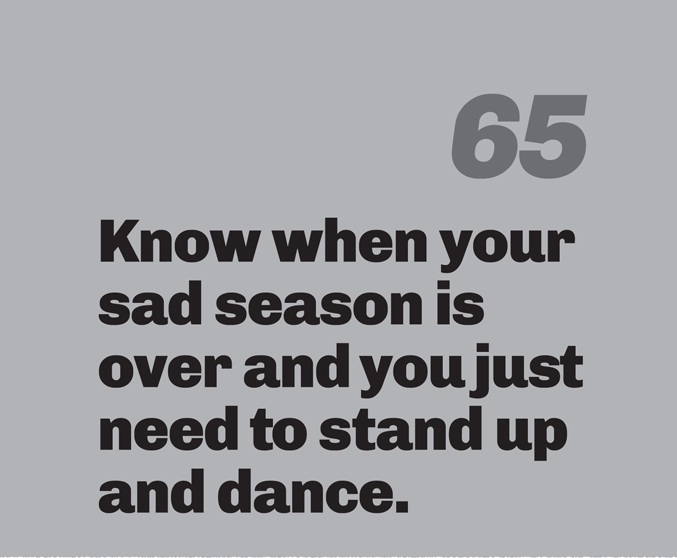
It’s time to stand up and dance.
练习题
What is the main lesson of the phrase “Don’t become content with living crappily ever after”?
In the call center story, what created a sense of solidarity among coworkers?
Which statement best describes Rosey’s reason for giving up cooking?
Which ideas are supported by the author’s description of the call center and Rosey? Select all that apply.
According to the “sad playlist” section, which actions or realizations help a person move forward emotionally? Select all that apply.
The author presents “grown-up pants” as a positive symbol of maturity because they show that a person has wisely stopped dreaming.
The “sad playlist” is both literal and figurative: it represents music as well as emotional patterns that can keep someone stuck in sadness.
The author says it is time to change the emotional playlist and “stand up and ___.”
How does Rosey’s story illustrate the danger of becoming comfortable with mediocrity?
How can the author’s advice about changing the “sad playlist” connect to the earlier idea that people who know how to change will succeed?
Which response best combines the lesson of the call center story with the earlier idea that people who learn to change are more likely to succeed?
Rosey gave up cooking after hardship and stayed in a job she hated. Which statements correctly integrate her situation with the earlier point about perseverance after disappointment?
Recognizing that a sad season is over and changing the emotional playlist is consistent with the earlier idea that change can build resilience and improvement.
When sadness has become habitual, the author’s advice to change the playlist and the earlier advice to give life another chance both point toward ___ rather than remaining stuck.
登录后解锁笔记、知识点解析、AI 问答
立即登录