正在学习
Cubicle Cincuenta and Office-Life Absurdity
Cubicle Cincuenta and Office-Life Absurdity
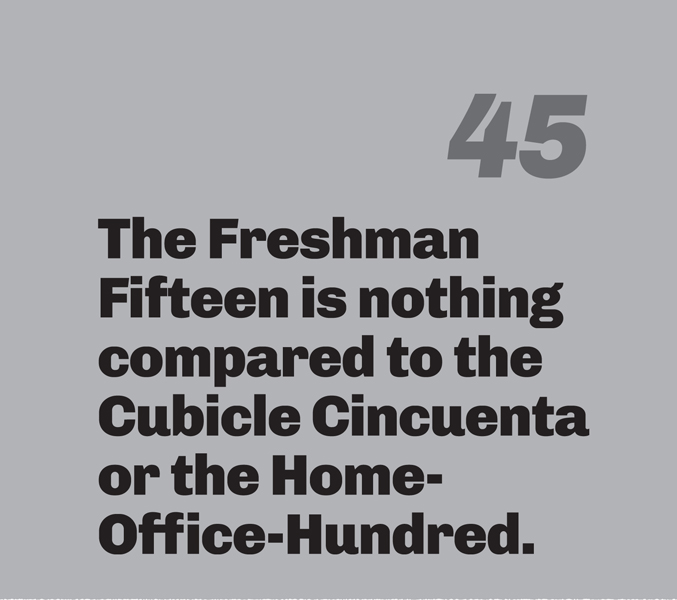
Cubicles are where waistlines go to die.
Unfortunately I learned this the hard way. Because there’s one inevitable truth about work environments where people don’t really like their jobs.
They eat.
A lot.
This is also true if you’re just working from home (maybe even more so). At home you have no social pressure to pretend like you’re trying to fit into uncomfortable dress pants or watch your weight.
No, you simply watch your weight steadily rise as that fridge seemingly beckons your name between every other email reply.
But if you’re with other coworkers, and everyone is trying to drown out utter boredom with junk food, the excuses for overeating can be endless. And I’m not talking carrots and cucumbers.
No, we’re talking about the office birthday cake. The Christmas potluck singalong. The July 4th Barbeculooza. The “Just Because” Donut Day. Basically any work-related Food-a-Thon where everyone tries to drown their jobs for 30 minutes with chocolate icing.
Just say no.
Don’t let office birthday cake be forced on you like a cigarette behind your middle school.
Don’t sit at your computer perched like a Roman gargoyle. Bust out before your belly does. Take a walk at lunch. Stand up and move around at least every hour. Our bodies were not made for all this sitting.
Fight against the sit all day. Say no to the Cubicle Cincuenta.
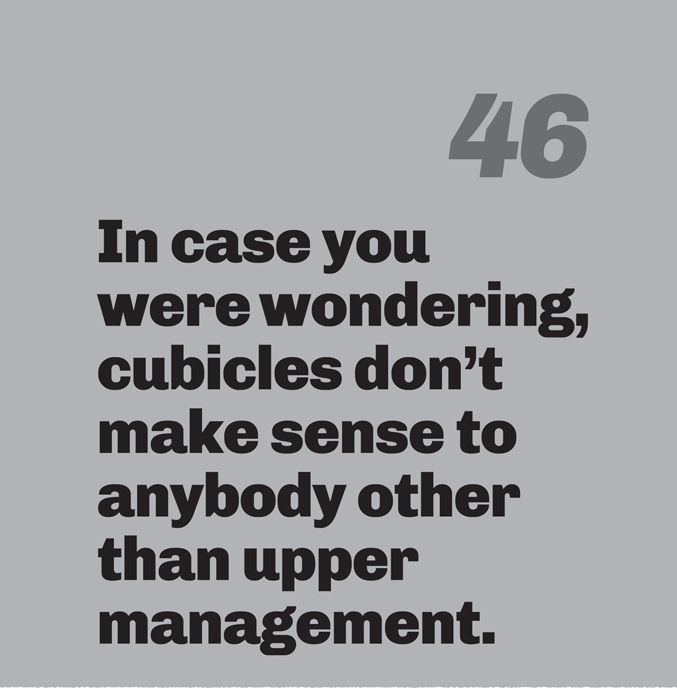
I would be willing to bet that only 13 percent of all “Cubicle Americans” actually have a positive outlook on life. And half of that 13 percent is probably stealing from their company.
练习题
According to the section, what is the main unhealthy pattern the author associates with work environments where people dislike their jobs?
Why does the author suggest that working from home may make overeating even easier?
Which actions would match the author’s advice for resisting the “Cubicle Cincuenta”? Select all that apply.
The section portrays office birthday cake, potlucks, donut days, and similar events as possible excuses for overeating rather than as examples of healthy workplace culture.
The author argues that cubicles make sense to nearly everyone in the office except upper management.
The author says to “Fight against the sit all day” and “Say no to the ___.”
How does the author connect sedentary office behavior with the need to resist workplace junk food?
How does this section’s criticism of cubicle life connect with the earlier idea that comfortable work can become a trap?
In the author’s joke about “Cubicle Americans,” what does the claim about only percent having a positive outlook mainly suggest?
The author’s advice to resist the “Cubicle Cincuenta” is similar to the earlier theme of perseverance because it requires repeated small choices, such as refusing junk food and moving regularly.
Which response best combines the author’s advice about the “Cubicle Cincuenta” with the earlier warning that comfortable work can become “quicksand”?
Which statements accurately connect the author’s criticism of cubicle life with earlier ideas about quarter-life development and career exploration?
The author’s joke that cubicles “don’t make sense to anybody other than upper management” fits with the earlier idea that young adults should not blindly follow the linear path into a cubicle job without questioning it.
How does the author’s advice to avoid workplace overeating and sitting all day connect to the earlier warning that comfortable work can cost growth and self-discovery?
登录后解锁笔记、知识点解析、AI 问答
立即登录